
By Dorcas Makotore
BEEKEEPERS IN Nyanyadzi are positioning themselves to tap into export markets following the establishment and strengthening of the Nyanyadzi Honey Cluster through training on modern beekeeping practices aimed at improving honey quality and production.
The training, facilitated by ZimTrade and its partners through the ZimBee Project, is expected to enhance the competitiveness of honey produced in the area and create new income-generating opportunities for local households.
For many families in Nyanyadzi, beekeeping has long been an important source of livelihood, providing income while contributing to the conservation of bee populations and the natural environment.
The community has traditionally relied on log hives, a method passed down through generations.
While the practice has enabled households to harvest honey and other bee products over the years, limitations in hive management and harvesting techniques have often affected productivity and the quality of honey available for the market.
Nyanyadzi’s favourable natural environment, characterised by indigenous trees and diverse flowering plants, has enabled local beekeepers to produce honey known for its distinctive flavour and quality.
However, challenges associated with traditional production methods have made it difficult for producers to fully benefit from growing demand in formal and export markets.
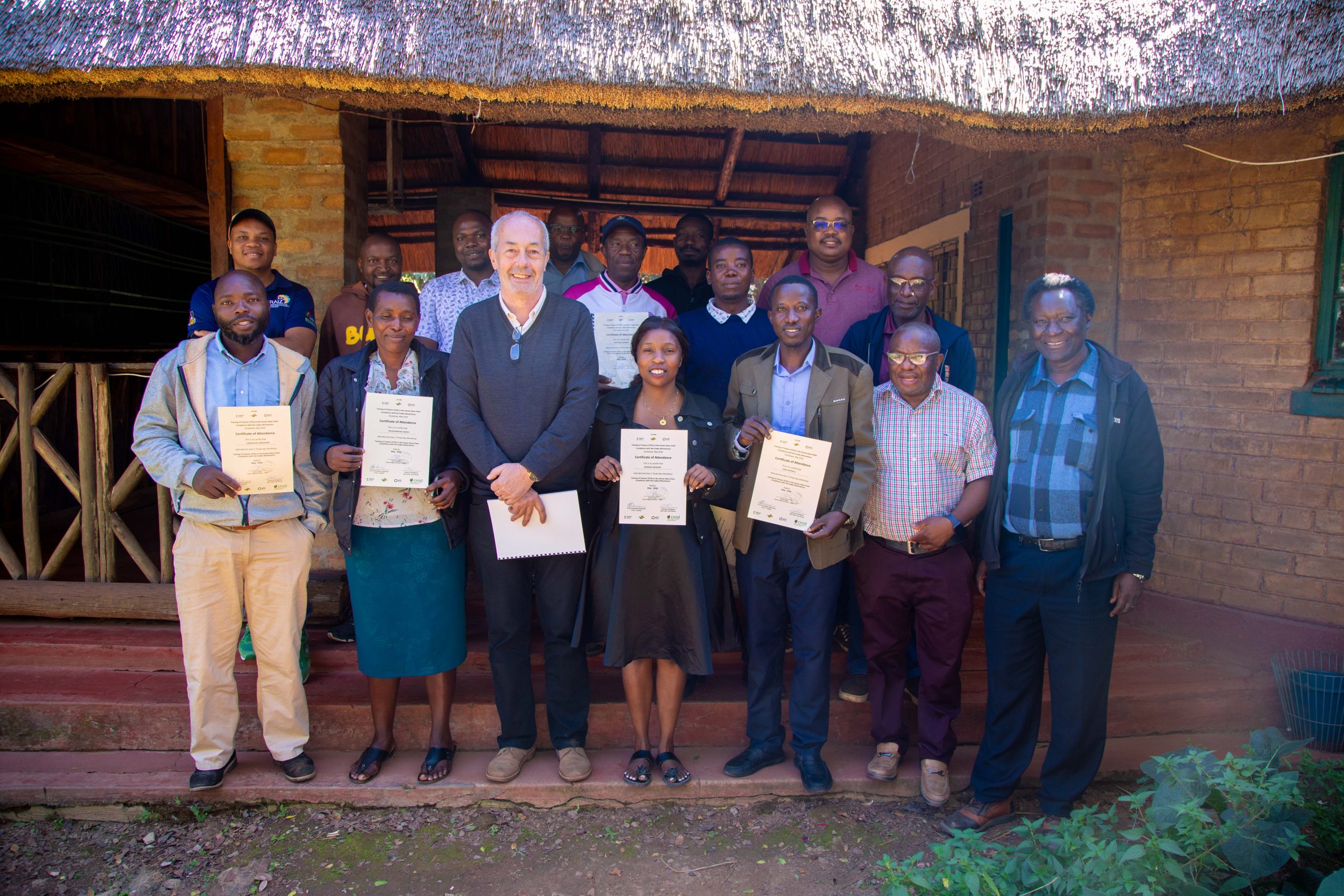
To address these challenges, members of the Nyanyadzi Honey Cluster recently underwent practical training in modern hive construction and hive management.
The programme introduced participants to improved production methods and provided hands-on experience in constructing modern hives using locally available materials.
Beekeepers were trained on hive placement, colony management, honey harvesting techniques and methods for maintaining healthy and productive bee colonies.
The adoption of modern hives such as the Kenya Top Bar and Langstroth hives is expected to improve honey quality and increase production.
Unlike traditional log hives, modern hives allow for easier inspection of colonies, better monitoring of bee health and more efficient harvesting methods that minimise disturbance to bee populations.
Improved hive management is expected to result in stronger colonies and higher honey yields, enabling producers to supply larger volumes of quality honey to the market.
The development comes at a time when demand for natural honey and other bee products continues to grow in both domestic and international markets.
Improved production standards will place members of the cluster in a stronger position to access higher-value markets and benefit from emerging export opportunities.
The adoption of modern beekeeping practices is also expected to broaden participation within the sector, particularly among women.
Traditional log hives are often suspended high in trees, making installation, inspection and harvesting difficult for many potential participants.
Modern hives can be mounted on stands closer to the ground, making hive management more accessible and creating opportunities for more women to actively participate in beekeeping activities.
Increased participation is expected to contribute to higher household incomes and strengthen economic inclusion within the community.
Participants welcomed the training, noting that the use of locally available materials in hive construction would make it easier and more affordable to adopt the new techniques.