Zimbabwe’s honey industry is set to strengthen its export competitiveness following the establishment of a specialised honey testing and profiling laboratory.
The facility is expected to enhance quality assurance within the honey value chain by providing testing services required to meet international food safety and trade standards, a key requirement for accessing premium export markets.
The laboratory has been established under the ZimBee project, which is implemented by national trade development and promotion organisation, ZimTrade, with funding support from Agence Française de Développement (AFD).
The facility was established in collaboration with the Department of Veterinary Services (DVS) under the Ministry of Lands, Agriculture, Fisheries, Water and Rural Development.
As the national competent authority, DVS will manage the laboratory, ensuring access to testing services for stakeholders across the honey value chain.
The ZimBee project is designed to improve the competitiveness of locally produced honey and honey-derived products by addressing technical barriers that have constrained access to international markets, particularly the European Union (EU).
The Project forms part of ZimTrade’s Cluster Development Programme, which promotes standardised production and aggregation to enable rural communities to participate more effectively in export markets.
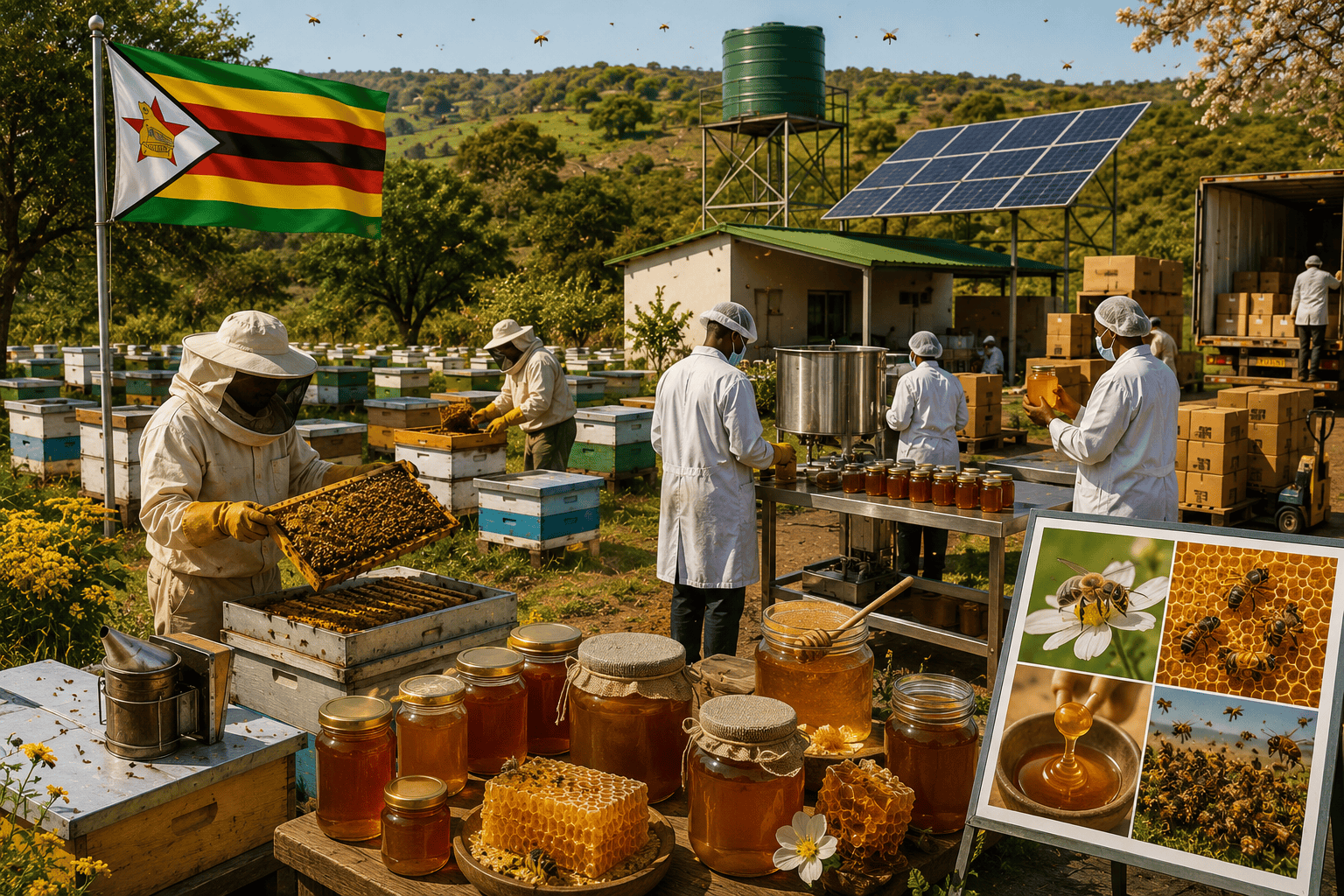
To date, the project has supported 455 honey producers across three clusters through training and the provision of beekeeping equipment, including modern hives, while encouraging sustainable and environmentally friendly production practices.
Beyond the targeted clusters, the laboratory is expected to strengthen Zimbabwe’s national quality infrastructure and support efforts to expand honey exports.
It will also contribute to the country’s bid to secure approval for honey exports into the European Union, one of the world’s major honey markets.
Increased market access is expected to improve income opportunities for beekeeping communities.
For many rural households, beekeeping has traditionally served as a supplementary source of income, although limited access to premium markets has constrained the sector’s growth potential.
The laboratory seeks to address this challenge by providing specialised testing services aligned with Codex Alimentarius standards, which are widely recognised in international food trade.
Its capabilities include pesticide residue screening, adulteration detection and botanical origin verification, helping producers demonstrate compliance with the requirements of export markets.
The facility is also expected to encourage wider adoption of professional beekeeping practices by providing producers with a reliable mechanism for product certification and quality verification.
Speaking on the development, ZimTrade Chief Executive Officer Mr Allan Majuru said transparency and traceability had become increasingly important in the global honey trade.
“International buyers no longer rely solely on general quality assurances but require certified laboratory reports that verify product integrity,” he said.
“The establishment of this laboratory will enable locally produced honey to meet the requirements of major international markets while supporting rural communities to participate more effectively in global trade.”
Although Zimbabwe has existing agricultural testing facilities, the honey sector has historically lacked access to specialised forensic testing services required by many export markets.
The laboratory is expected to enhance product quality assurance across the value chain and support sustainable growth of the sector, particularly among rural producers.
BOXED About the ZimBEE Project
Launched in March 2025 and running through to 2027, the ZimBEE project is a multi-faceted initiative aimed at strengthening the honey sector’s contribution to economic development.
The project includes Training-of-Trainers programmes in apiculture, support for the development of a National Residue Monitoring Plan (NRMP), and the establishment of the honey testing laboratory.
These interventions are expected to improve compliance with international market requirements and create pathways for rural beekeepers to access higher-value export markets.
The initiative also supports sustainable beekeeping practices and improved product traceability, strengthening Zimbabwe’s prospects of expanding honey exports to international markets.