

By Melisa M Ncube
RURAL PRODUCTION systems in Zimbabwe are undergoing gradual transformation as export clusters create new pathways for small-scale producers to participate in international trade through coordinated production, improved compliance and stronger market linkages.
For many years, rural communities with productive capacity remained largely disconnected from export markets due to fragmented production, limited volumes, inconsistent quality and weak access to certification and logistics systems required by international buyers.
Individual producers often struggled to meet market requirements relating to traceability, product consistency and export documentation.
Through the Export Cluster Development Programme, ZimTrade is working to address these constraints by organising producers into coordinated production systems designed to improve export readiness and strengthen participation in formal markets.
Rather than supporting isolated production activities, the cluster model groups producers around common production standards, technical support systems, market requirements and export coordination mechanisms.
The approach is helping create production ecosystems capable of supplying international markets more consistently.
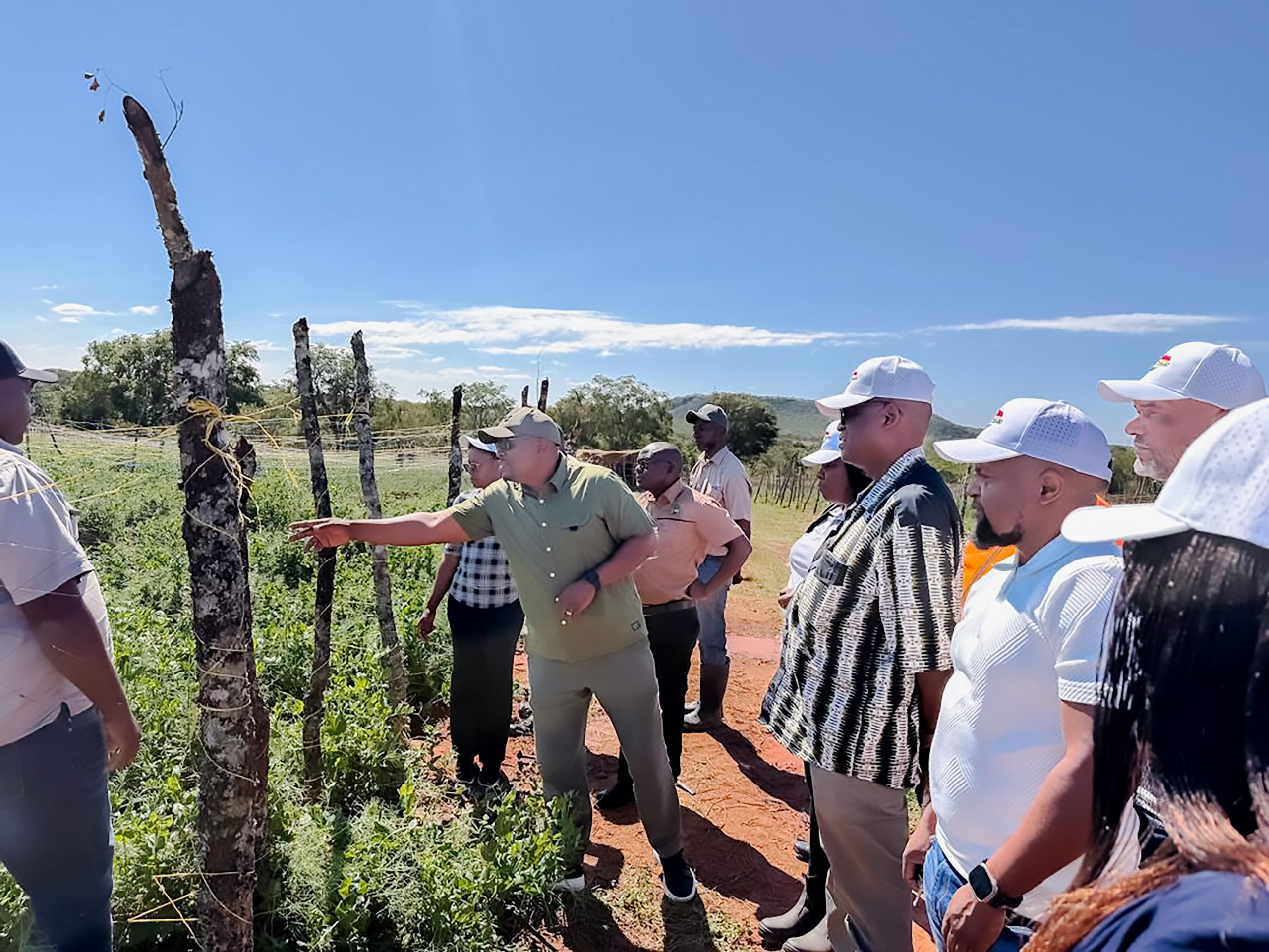
The impact of this model was recently demonstrated during a ZimTrade Board visit to the Midlands Peas Cluster, one of Zimbabwe’s developing horticultural export clusters producing sugar snap and mange tout peas for the United Kingdom market.
The visit provided an opportunity to assess production progress and engage stakeholders on measures required to strengthen competitiveness and sustainability within export-oriented rural industries.
The Midlands cluster reflects broader changes taking place within rural production systems.
Where producers previously operated independently and supplied informal markets, cluster members are increasingly producing under coordinated schedules aligned to export demand, supported by shared technical guidance and quality management systems.
This shift is becoming more important as international markets place greater emphasis on compliance and supply reliability.
Export competitiveness is no longer determined by production volumes alone.
Buyers increasingly require suppliers that can demonstrate consistency, traceability, quality assurance and compliance with market standards.
For individual smallholder producers, meeting these requirements independently can be difficult due to costs associated with certification, record keeping, aggregation and logistics.
Export clusters create opportunities to share resources, improve coordination and reduce barriers to market entry.
Under the cluster model, producers receive support in areas that directly influence export performance, including good agricultural practices, grading standards, harvesting protocols, post-harvest handling and market compliance.
Additional systems such as cold chain management, aggregation centres, logistics coordination and market intelligence are also becoming integrated into rural production areas.
The result is a gradual shift from rural production focused mainly on output towards production systems designed around market requirements and export sustainability.
Beyond the Midlands horticulture cluster, similar models are being implemented across several value chains.
Honey clusters in areas such as Chikomba and Nyanyadzi are receiving support for organic certification and improved compliance systems to strengthen access to premium markets.
Horticulture clusters in different parts of the country are focusing on export-oriented products including avocados, bananas, citrus, flowers, strawberries and spices, with emphasis placed on coordinated production and market readiness.
The handicrafts sector is also benefiting from cluster development.
Rural artisans are receiving support to improve product quality, standardisation and market positioning while preserving traditional skills and adapting products to changing international demand.