By Melisa Ncube
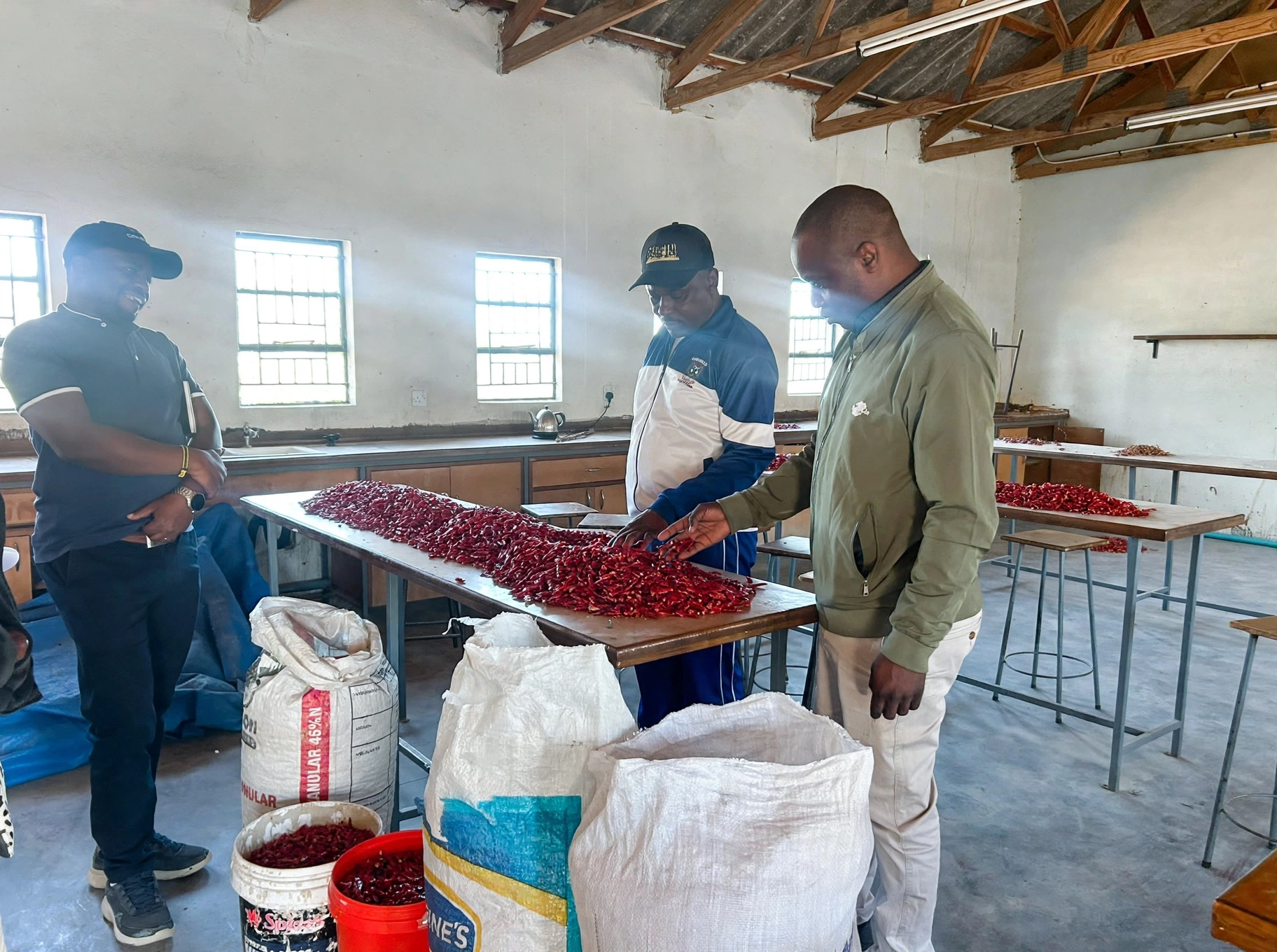
ORGANISED CHILLI farmers in Gokwe South are working with ZimTrade to secure reliable markets before the next planting season, as efforts gather pace to develop the district’s emerging chilli value chain.
The initiative seeks to connect farmers with established offtakers that understand the product and already supply regional and international markets.
Early engagement with buyers is expected to help farmers make production decisions based on actual market requirements, rather than growing the crop first and searching for customers after harvesting.
This approach is becoming increasingly important as Zimbabwe seeks to increase agricultural exports.
Across Africa, demand for agricultural products is growing, while trade agreements are opening new opportunities for producers.
However, access to a market does not automatically result in sales.
Products still require a clear route from the producer to the buyer.
Farmers must know who will purchase the crop, which varieties are required, the volumes expected, the quality standards to be met and how the product will be collected and delivered.
ZimTrade’s engagement with farmers in Gokwe South is therefore focusing on the full route to market and not only on the existence of demand.
The proposed model will link organised farmers with established offtakers before production begins.
In such an arrangement, the offtaker does more than purchase the crop at the end of the season.
The buyer communicates market requirements before planting, giving farmers guidance on preferred chilli varieties, expected quality, production volumes, harvesting schedules, aggregation arrangements and delivery conditions.
This allows demand to guide production from the outset.
It also reduces the risk of farmers producing crops that do not meet buyers’ requirements or cannot be sold at viable prices.
The immediate objective is not to turn every farmer into a direct exporter.
Many small-scale and emerging producers may not yet have the capacity to handle export documentation, logistics, quality certification, payment arrangements and direct negotiations with foreign customers.
Supplying an established offtaker provides a more practical entry point.
The offtaker can aggregate produce from several farmers, maintain the volumes required by buyers and manage the movement of the crop to the final market.
Farmers, in turn, become part of an existing supply chain while improving their production systems and understanding of market requirements.
Consistent supply, reliable quality and proper coordination among producers will be critical to the success of the arrangement.
Organised production will make it easier to consolidate the crop, monitor quality and meet agreed delivery schedules.
The model could also help farmers build a production record that may allow them to take on a larger role in the export process over time.
The Gokwe South initiative reflects a wider shift in export development, where businesses are encouraged to select a route to market that matches their current capacity.
Participation in international trade does not always require a producer to sell directly to the final customer.
Small farmers may supply an exporter or processor, while a processed-food company may use an importer or distributor with access to supermarkets and wholesale outlets.
Manufacturers of specialised products may need agents with established relationships in a particular industry.
Larger and more experienced exporters may have the capacity to deal directly with foreign buyers and manage their own logistics, documentation and distribution.
The most suitable route depends on the product, the way the target market operates and the exporter’s ability to meet the responsibilities involved.
Understanding these market structures will be important as Zimbabwe seeks to increase trade under the African Continental Free Trade Area.
The AfCFTA has created a broader platform for African goods and services to move across the continent, but businesses must still develop practical strategies for individual markets.
This is because distribution systems, buying practices, transport arrangements, regulations and customer preferences differ across countries.
An approach that works in one market may not necessarily produce the same results in another.
Zimbabwean companies must therefore move beyond identifying countries where demand exists and establishes how their products will reach buyers in those markets.
This requires information on the key buyers, order sizes, product standards, distribution channels, delivery costs and payment arrangements.
Such information should be obtained before businesses commit significant resources to production.